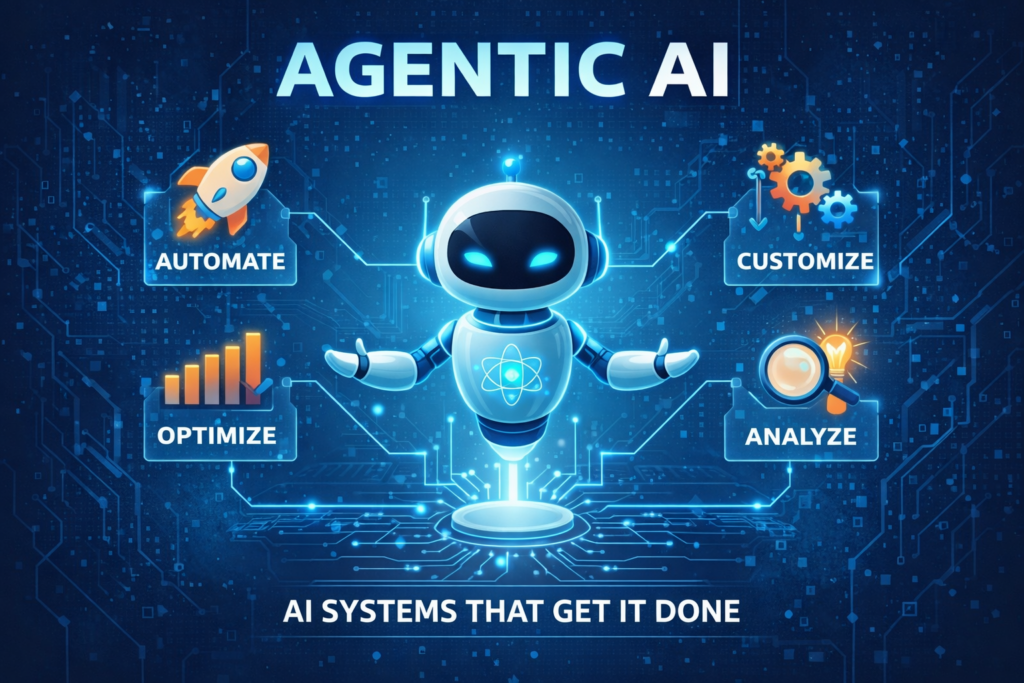
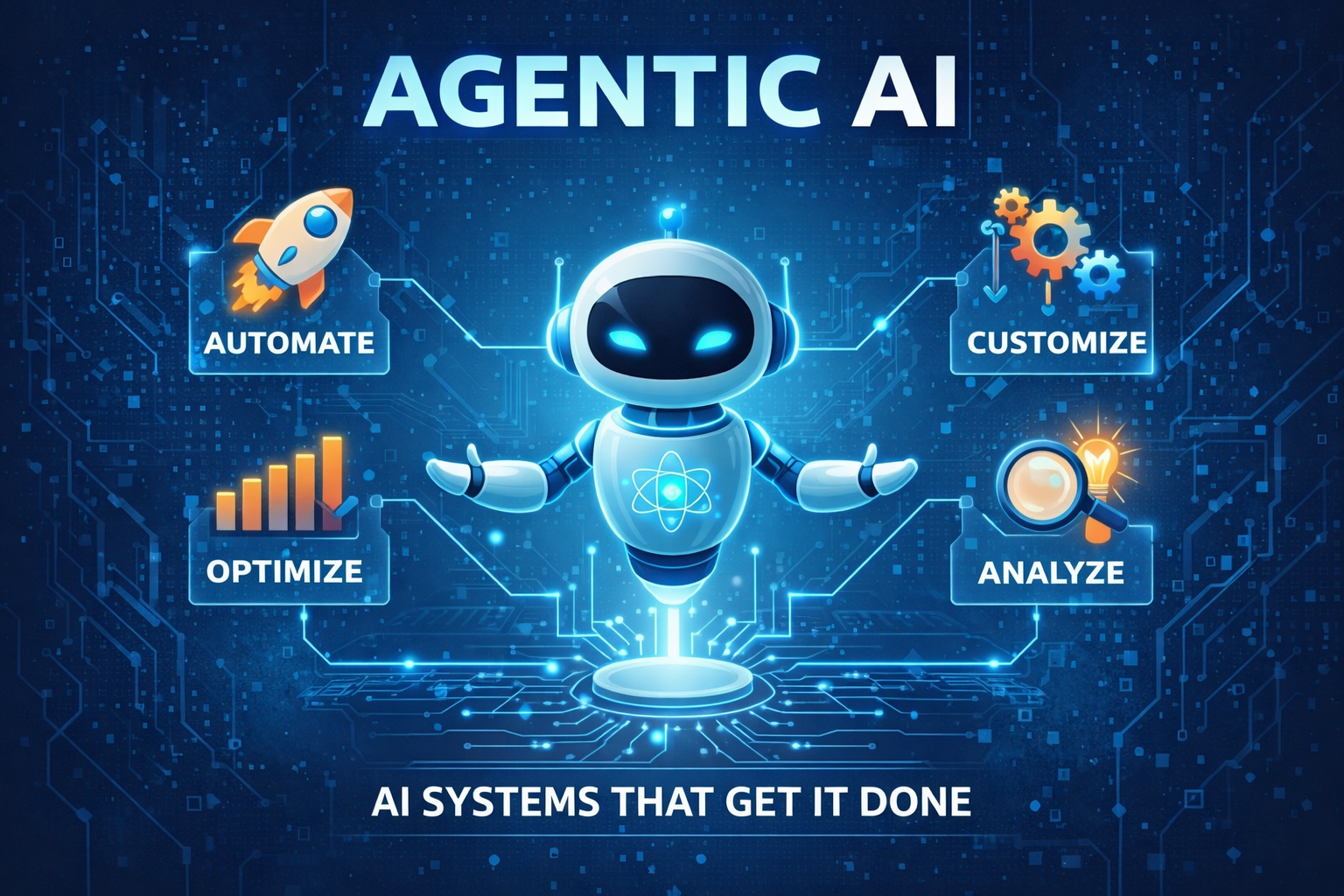
A single goal drives some smart machines to act on their own. These systems think ahead instead of waiting around for orders. Step by step they shift course without needing someone watching closely. Most robots just answer questions yet these push forward without constant nudges. Decisions come naturally because they learn what works along the way.
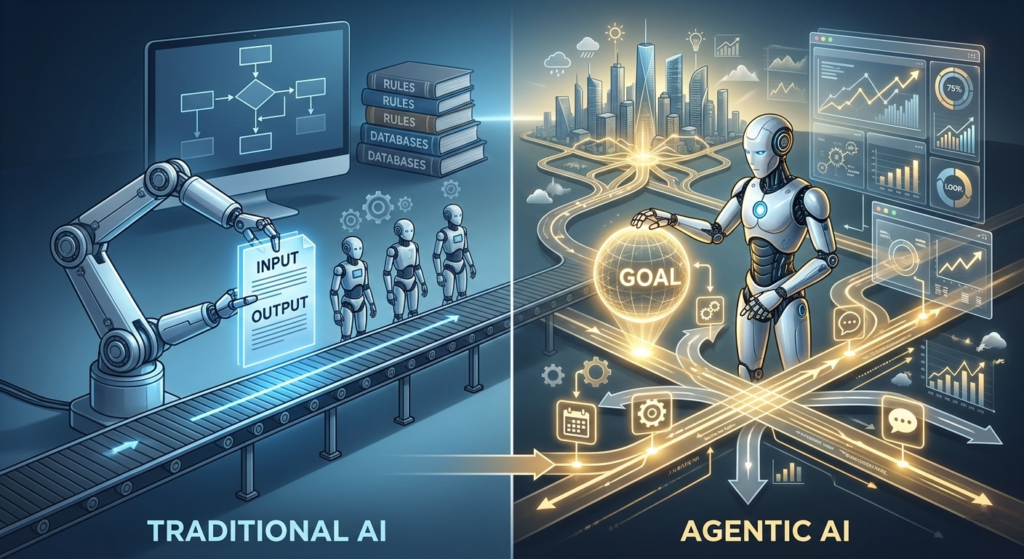
A typical artificial intelligence sticks to fixed instructions or answers questions when asked. Instead of waiting, Agentic systems watch information flow by. One step leads to another because choices emerge from context. Results matter most, not just replies one at a time.
A single question might get a reply from an old style chatbot. Handling many tasks at once like responding to customers, changing data, setting reminders, then sharing outcomes just flows naturally with Agentic AI, no constant prompts needed.
Traditional AI Function
A single instruction sets older AI models into motion. Following that, they sift through patterns learned during setup. Without a clear signal, nothing happens next.
Examples include:
- Image recognition tools
- Recommendation engines
- Standard chatbots
- Predictive analytics models
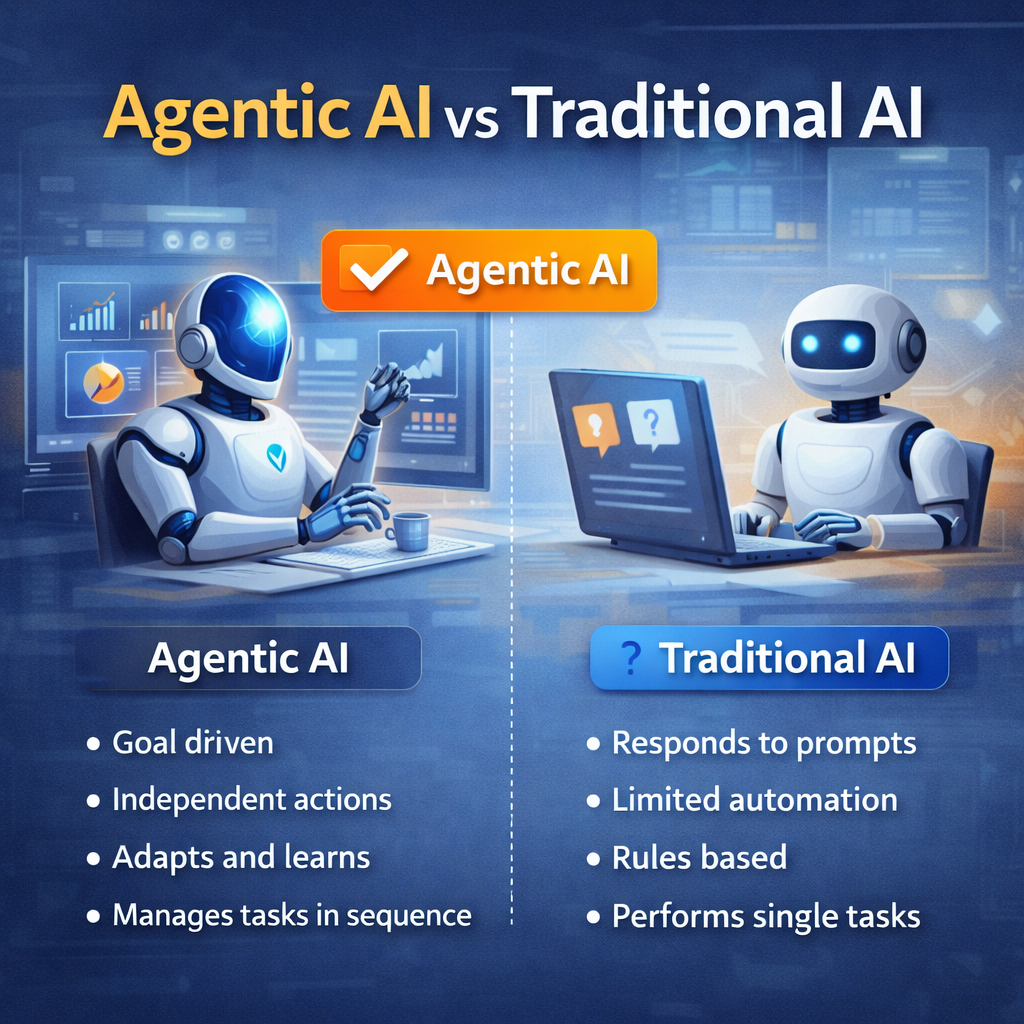
Useful as these tools may be, they only respond after something happens. One job finishes before another begins, sitting idle until told what to do next.
Agentic AI Works Differently
Now here comes Agentic AI built to act on its own. Breaking down a target into pieces? That ability shows up early. One step follows another, chosen by the system itself. Watch it adjust course while moving ahead.
Related Post: AI Powered SEO: Navigating Google AI Overviews
Key differences include:
1. Goal Driven Operation
Here’s how it goes. Regular artificial intelligence answers when asked something. What sets agentic systems apart is their drive to reach goals on their own. They do not wait around for prompts.
2. Decision Making
Now here comes a shift choices get weighed, decisions made depending on what’s happening around them.
3. Multi Step Execution
One step leads into another when agentic AI handles connected jobs one after the other, rather than just doing one thing at once.
4. Continuous Learning
A fresh path opens when the system learns from what happens next. Outcomes shape its choices, nudging it forward. Each step adjusts, guided by real experience. Progress grows quieter but deeper each round.
Real World Applications
Working on its own, Agentic AI handles tasks like organizing workflows, powering virtual helpers, then running complex company processes. From start to finish, support interactions get managed without constant human input. Campaigns are studied by the system, spending shifts based on results, while summaries appear without manual work. Operations keep moving because decisions happen inside the software, not just alongside it.
Faster workflows help companies get things done more quickly. Less hands on work means teams spend time elsewhere. Smarter insights guide choices with clearer results.
Why Agentic AI Matters
When machines get trickier, basic automation falls short. Instead of just reacting, smarter systems think ahead, adjust steps, and then act. These kinds of tools blend foresight with decisions and follow through.
Even so, older AI still works well for certain jobs. Because it takes those basics further working alone while choosing its own path forward a new kind steps up. Finding this gap makes it easier for groups to map out tech moves ahead, clear eyed.