AI & TechnologyAugust 3, 2026
Building ChatGPT Like Applications with Python: A Practical Guide for Modern Businesses
Build ChatGPT-like AI applications with Python using LLMs, FastAPI, LangChain, and RAG to create intelligent, scalable solutions that automate workflows and improve business efficiency.
Agix International
Agix International
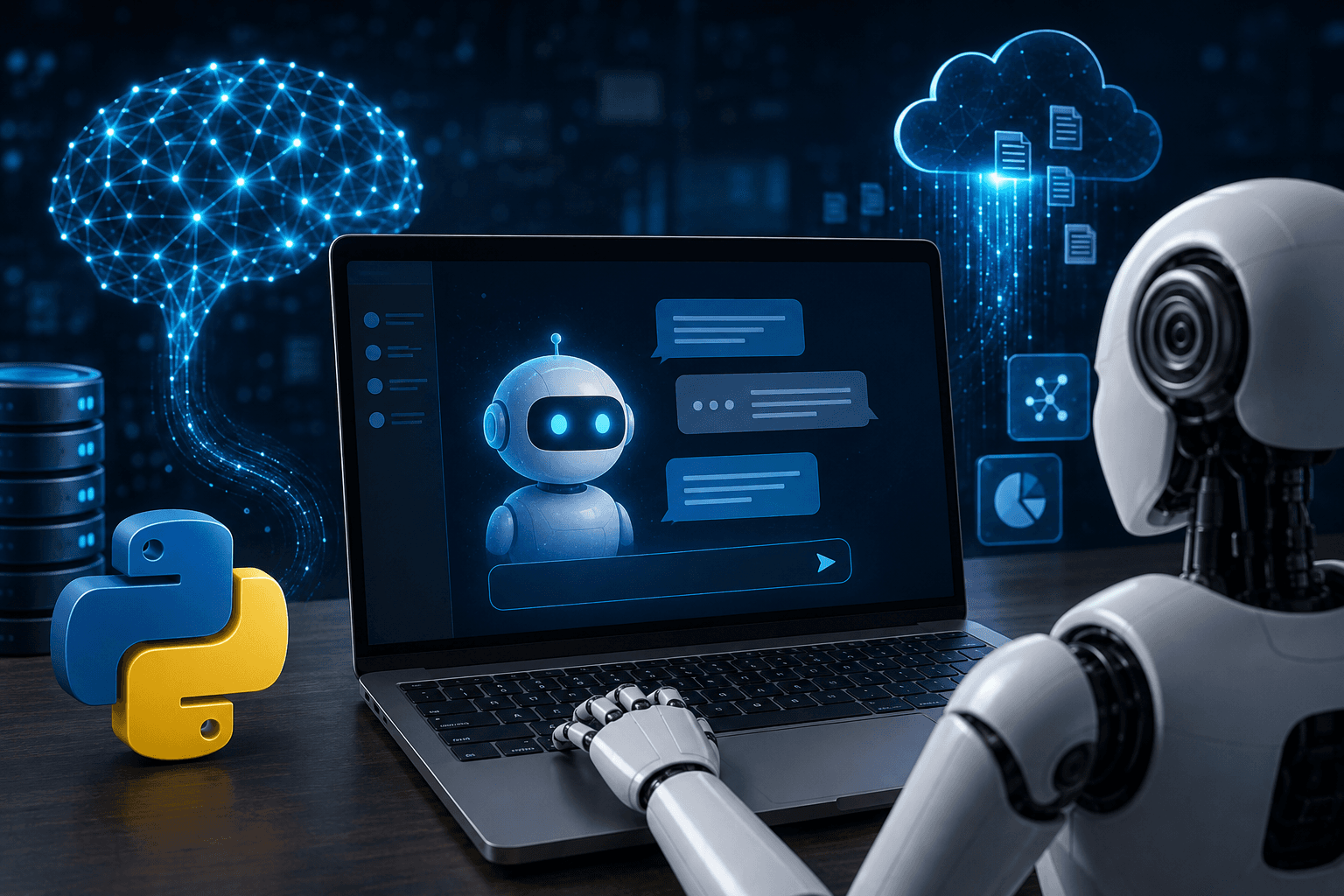
Artificial Intelligence has transformed the ways in which businesses communicate with their customers, handle information, and automate their everyday operations. By allowing users to communicate directly with software using natural language, ChatGPT has set a global benchmark for conversational AI. As a result, many businesses are investing in developing their own artificial intelligence systems designed to meet their unique requirements.
Due to its simplicity, extensive library ecosystem, and powerful capabilities for machine learning and natural language processing, Python has become the primary programming language for building these solutions. For organizations interested in Python AI development, understanding the core components of a ChatGPT-like application is essential for building effective AI-powered products.
What Is a ChatGPT Like Application?
A ChatGPT-like application is an AI-powered system that understands user queries, maintains conversation context, and generates human-like responses. Unlike traditional chatbots that rely on predefined rules and scripted replies, these applications use Large Language Models (LLMs) to generate responses based on user input and conversation history.
Common Capabilities
- Conversational support
- Content generation
- Document analysis
- Knowledge retrieval
- Data summarization
- Coding assistance
- Business process automation
These capabilities make AI application development valuable across industries such as:
- Healthcare
- Education
- Legal services
- Finance
- Customer support
- Market research
Why Python Is the Preferred Choice
Python is widely preferred for AI development because of its clean syntax, ease of learning, and extensive ecosystem of AI and machine learning libraries. It allows developers to build, maintain, and scale intelligent applications efficiently.
Popular Python Tools
- FastAPI – Backend development
- LangChain – AI workflow orchestration
- LlamaIndex – Document processing and retrieval
- Transformers – Large Language Models
- Pandas – Data analysis
- NumPy – Numerical computing
These tools significantly reduce development time while supporting scalable AI systems.
Core Components of a ChatGPT Like Application
A successful AI assistant consists of several integrated components.
1. User Interface
The user interface enables communication between users and the AI through web, mobile, or desktop applications. A responsive and intuitive interface improves usability and user engagement.
2. Backend Services
The backend handles:
- User authentication
- Conversation history
- API communication
- Data processing
FastAPI is commonly used because it offers excellent performance and asynchronous request handling.
3. Large Language Model
The Large Language Model serves as the intelligence engine of the application. It interprets prompts and generates responses.
Organizations can choose between:
- Cloud hosted AI models
- Self hosted models for enhanced security and customization
4. Database Layer
The database stores:
- User profiles
- Conversation history
- Application settings
- Analytics
Common database technologies include:
- PostgreSQL
- MongoDB
- Redis
Adding Knowledge with Retrieval Augmented Generation (RAG)
One of the biggest challenges in conversational AI is maintaining response accuracy. Large Language Models can sometimes generate incorrect or outdated information.
Retrieval Augmented Generation (RAG) addresses this issue.
Instead of relying only on the model's trained knowledge, RAG retrieves relevant documents before generating a response.
For example, an organization can connect its AI assistant to:
- Company policies
- Financial reports
- User manuals
- Research documents
- Internal knowledge bases
When users ask questions, the system retrieves relevant information and uses it to generate more accurate and trustworthy responses.
This approach greatly improves reliability and makes AI assistants more useful for enterprise environments.
Managing Context and Memory
Memory management is a critical feature of modern conversational AI.
Short Term Memory
Short term memory maintains the current conversation context, allowing the AI to answer follow-up questions accurately.
Long Term Memory
Long term memory stores:
- User preferences
- Historical conversations
- Personalized information
This creates a smoother user experience by reducing repetitive interactions and improving personalization.
Effective memory management significantly improves response quality and customer satisfaction.
Security and Scalability Considerations
Security should be incorporated from the beginning of development.
Essential Security Measures
- User authentication
- Role based access control
- Data encryption
- Secure API communication
- Activity logging
Scalability
As applications grow, they must support increasing workloads efficiently.
Popular technologies include:
- Docker
- Kubernetes
Cloud platforms further enhance scalability by allowing organizations to expand computing resources based on demand while maintaining high performance and reliability.
Business Applications
ChatGPT-like applications are now valuable across many business functions.
Customer Support
AI assistants can instantly answer frequently asked questions, reducing response times and improving customer satisfaction.
Sales
Sales teams use AI to:
- Generate leads
- Qualify prospects
- Improve customer engagement
- Support sales representatives
Market Research
AI analyzes survey responses and customer feedback to generate actionable business insights.
Internal Knowledge Management
Employees can quickly access company policies, documentation, and internal information without manually searching through multiple systems.
These applications improve productivity, automate repetitive tasks, and support better decision-making across organizations.
Conclusion
Building ChatGPT-like applications with Python has become more accessible than ever. Modern development frameworks, advanced language models, and mature AI libraries enable businesses to create intelligent assistants capable of automating complex workflows while enhancing customer experiences.
Python continues to play a central role in AI innovation because of its flexibility, scalability, and comprehensive ecosystem. Organizations investing in conversational AI today are building intelligent systems that improve operational efficiency, increase user engagement, and provide long-term business value.