Social MediaJune 25, 2026
How to Create High-Performing Facebook and Instagram Ad Designs
Learn how to create effective Facebook ad design and Instagram ad design that attracts clicks, improves ad engagement, and supports better campaign performance.
Agix International
Agix International
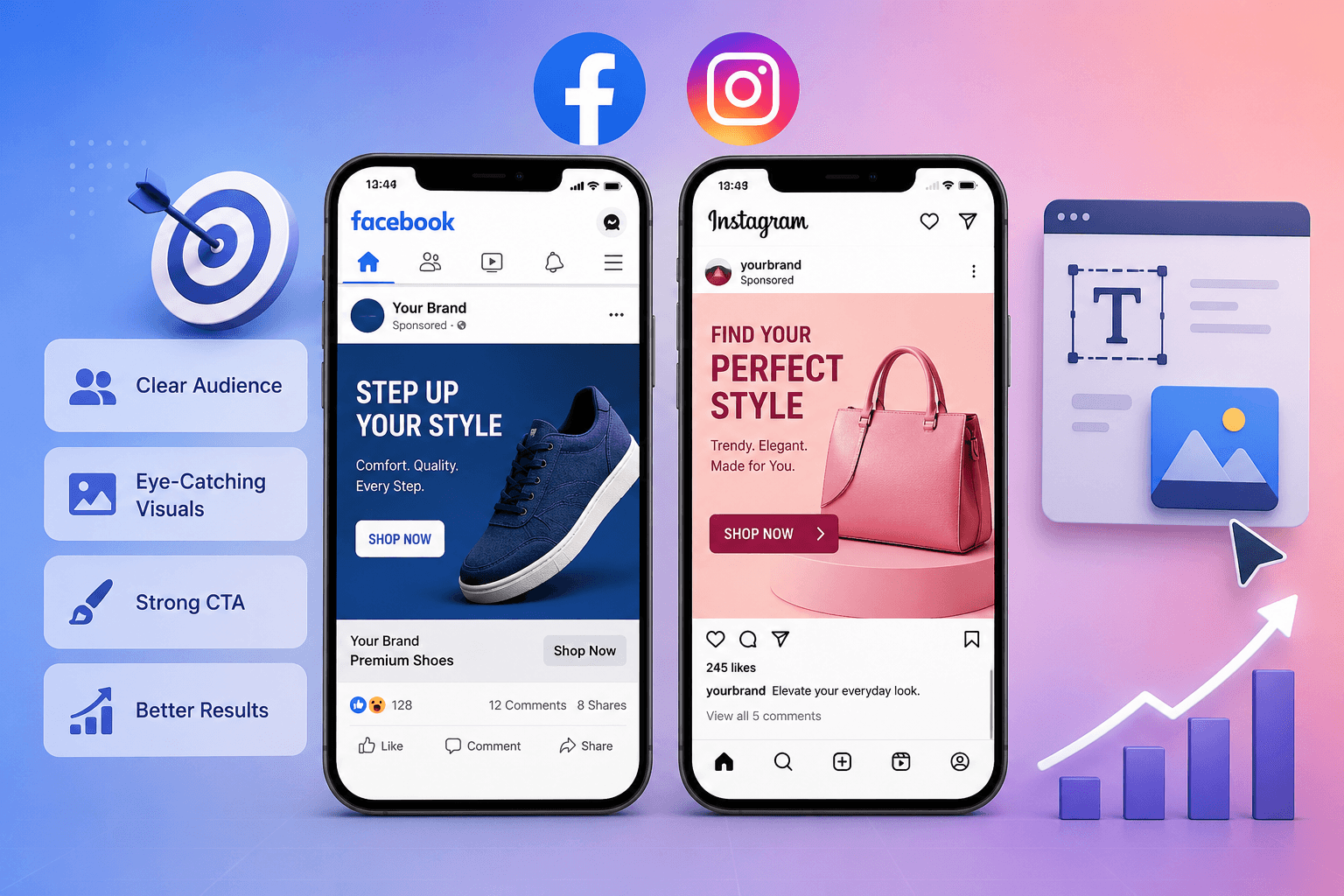
A successful paid campaign starts with a strong visual. Good targeting and the right budget are important, but people notice the design before they read the message. A clear and attractive ad can increase clicks, improve engagement, and help your campaign deliver better results.
Facebook and Instagram users scroll through content quickly. Your ad has only a few seconds to capture attention. This is why every part of your social media ad design should have a purpose.
Start with One Clear Message
Every ad should focus on one goal. Do not try to explain everything in a single creative. A simple message is easier to understand and more likely to receive clicks.
Choose one product, one service, or one offer. Keep the headline short and make the value clear. If your audience understands your message immediately, they are more likely to interact with the ad.
Use High Quality Visuals
Images and videos have a direct impact on Facebook ad design and Instagram ad design. Low quality graphics reduce trust and often lead to poor performance.
Use visuals that are sharp, bright, and relevant to your offer. Product photos should clearly show the item. Service based businesses should use real team photos, completed projects, or professional illustrations instead of unrelated stock images.
Good graphic design creates a professional first impression and supports your brand identity.
Make Text Easy to Read
People spend only a few moments looking at an advertisement. Large blocks of text often get ignored.
Use a short headline followed by a brief supporting message. Choose readable fonts and maintain good contrast between the text and the background.
Keep the design clean so viewers can understand the offer without effort.
Choose Colors That Match Your Brand
Consistent colors help people recognize your business across different campaigns.
Use your brand colors while making sure the important elements stand out. Buttons, offers, and call to action sections should be easy to notice without making the design look crowded.
A balanced color combination improves readability and supports better ad engagement.
Add a Strong Call to Action
A clear call to action tells users what to do next.
Simple phrases such as "Learn More," "Get a Quote," "Book Now," or "Contact Us" work well because they are direct and easy to understand.
Place the call to action where it is clearly visible without distracting from the main message.
Design for Mobile Users
Most Facebook and Instagram users access these platforms on mobile devices.
Your social media ad design should look good on smaller screens. Use larger text, simple layouts, and high resolution images. Important information should appear near the center of the creative so it remains visible across different placements.
Always preview your ad before publishing it.
Match the Ad with the Landing Page
An effective ad should connect naturally with the page users visit after clicking.
Landing page optimization plays an important role in campaign success. The headline, images, offer, and branding on the landing page should match the advertisement.
A consistent experience builds trust and helps increase conversions after the click.
Test Different Creative Versions
There is no single design that works for every audience.
Create multiple versions of your ad with different images, headlines, colors, or call to action buttons. Compare the results and identify which version receives better click through rates and engagement.
Small design improvements can produce better results over time.
Use Meta Ads Manager to Measure Performance
Meta Ads Manager provides useful data to understand how your ads perform.
Track important metrics such as click through rate, cost per click, impressions, and conversions. Review these reports regularly and update your creatives based on actual performance instead of assumptions.
Data helps improve future campaigns and reduces wasted advertising spend.
Common Design Mistakes to Avoid
Many businesses reduce ad performance by making simple design mistakes.
Some common issues include:
- Using too much text
- Low quality or unrelated images
- Weak call to action
- Inconsistent branding
- Poor color contrast
- Crowded layouts
- Sending users to an unrelated landing page
Avoiding these mistakes can improve ad engagement and increase click rates.
Conclusion
A successful Facebook ad design or Instagram ad design combines clear messaging, professional graphic design, mobile friendly layouts, and a relevant landing page. Every design element should support the campaign goal and make it easy for users to take action.
Review campaign data inside Meta Ads Manager, test new creative ideas regularly, and continue improving your ads based on performance. Small changes made consistently can lead to more clicks, better engagement, and stronger advertising results.