BrandingJuly 6, 2026
Rebranding Guide: When and Why Businesses Should Redesign Their Brand
Learn when a business should rebrand, the signs that indicate a brand redesign is needed, and the steps to create a stronger brand identity that supports long term business growth.
Agix International
Agix International
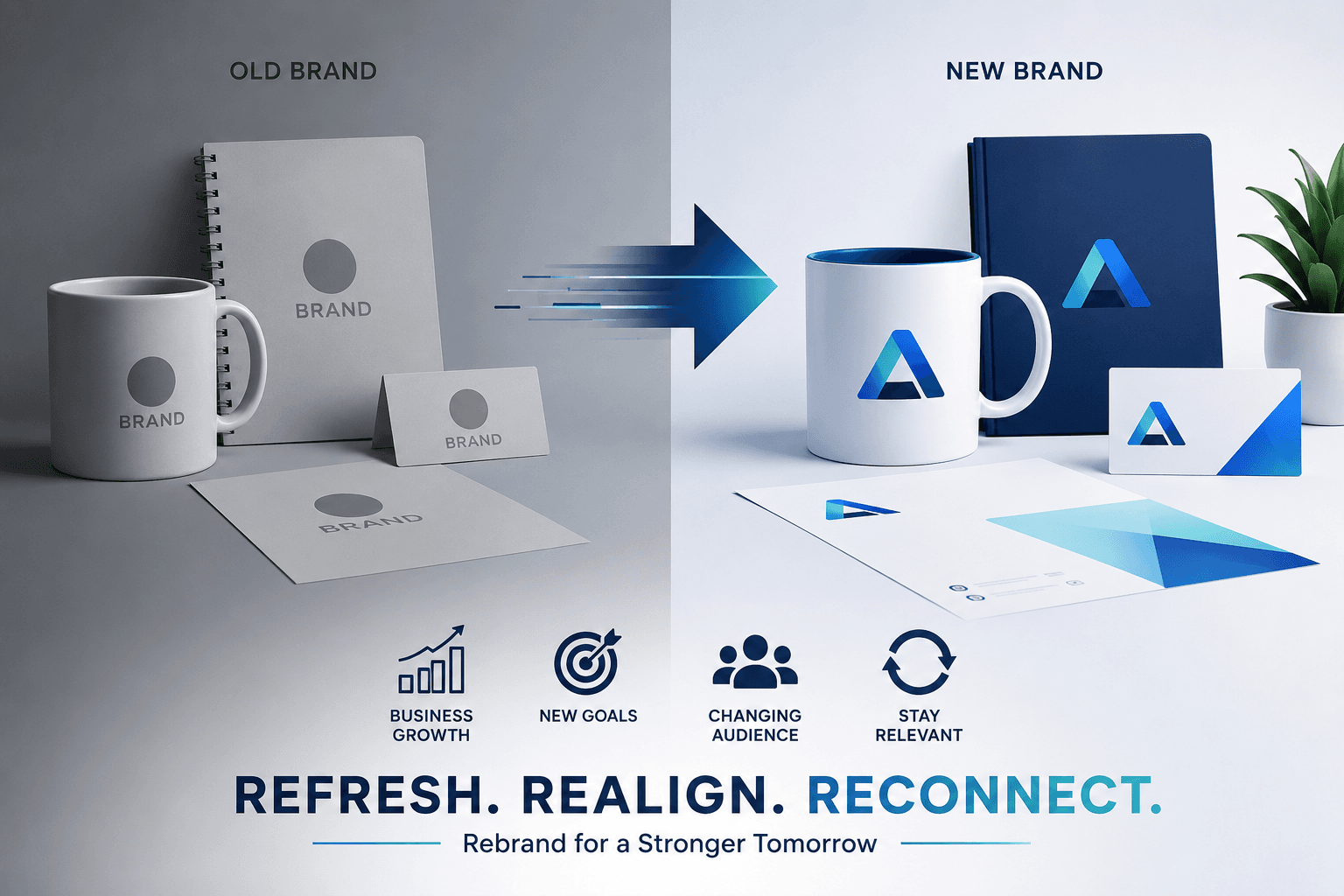
A strong brand not only enables customers to identify a business but also conveys the business values and nurtures trust cumulatively. Customer expectations, and markets, evolve. That's why, a brand that was effective a couple of years ago might not be aligned with the current company's objectives, products, or customer base.
Conducting a business rebranding exercise successfully goes far beyond just updating a logo or selecting a new color palette. Essentially, it involves establishing a brand persona that accurately reflects the company today and gears it up for its growth in the future. Through this rebranding handbook, learn the situations when a business may think of a brand redesign, reasons why businesses undertake rebranding, and methods to carry out the same.
What Is Business Rebranding?
Business rebranding is the process of updating or changing a company's brand identity. This may include the company logo, visual identity, messaging, website, marketing materials, and overall brand positioning.
Some companies decide to do a full rebranding with a new brand face even at the corporate level while others just make minor changes as brand refresh. The correct way to do it depends on the company's goals and their position in the market.
Signs You Need a Rebrand
Lots of companies hold on to old branding long after they have changed their products or services in a big way. Below are some typical signs that show you need to refresh your brand.
Your Brand Looks Outdated
Design trends change over time. If your logo, website, or marketing materials are out-of-date in comparison with your competitors, the public might see your business as old-fashioned.
Having a modern visual brand identity gives a great first impression.
Your Business Has Changed
Businesses frequently enter new markets, add different services, or go after different customer groups. When the existing branding is not really reflective of the business, it is time for a brand makeover.
Customers Do Not Recognize Your Value
If customers misinterpret the products and services delivered by your company, the branding of your company might be failing to clarify your message. A strong brand communication really helps in enhancing customer's comprehension and trust building.
Your Brand Is Inconsistent
Different logos colors fonts, or messaging on various platforms confuse customers. A consistent brand identity design not only enhances recognition but also builds trust.
You Need Better Market Positioning
Competition is increasing and companies must develop a distinctive identity that showcases their features. An innovative rebranding plan can enhance market positioning and the business could become more visible.
Why Businesses Rebrand
Each rebranding initiative aims at a different set of targets. Some firms decide to change their image after experiencing tremendous development over the years, while some others are simply reacting to the alterations of the market.
Common reasons include:
- Diversifying into new industries
- Opening up new geographic territories
- Targeting a different demographic
- Improving customer perception
- Refreshing company image
- Re-establishing after a negative reputation
- Initiating mergers or acquisitions
- Getting a better competitive edge
A successful company rebranding project aligns the brand with current business objectives.
Brand Refresh vs Complete Rebranding
It is not necessary for all companies to carry out a full-scale redesign. Refreshing a brand means revising only some elements such as color typeface web design, or communication while the main identity of the company remains unchanged. Full rebranding of a company involves changing almost everything - logo positioning, communication, and customer interaction. Deciding on the best choice should be based on the objectives of the business, evaluation of customer’s opinions, and plans for the future.
The Rebranding Process
Step-by-step rebranding is a great way to avoid the disarray and to make sure that the message is uniformly conveyed at all customer points of contact.
Review Your Current Brand
Think about your logo, web page, client reviews, and promotional pieces. Recognize the good parts and the ones that need enhancement.
Define Your Brand Position
Honest company values, understanding the customers and business targets form the basis of the new brand direction perfectly.
Update the Visual Identity
Design a contemporary logo, color choices, typographic and visual style that mirrors your company. A unified visual identity raises the chance of the brand being remembered across both digital and print media.
Improve Brand Messaging
The core of your message is conveying to your audience who you are, what you do, and what makes your business stand out. Effective communication boosts customer confidence.
Apply the New Brand Everywhere
Change your online portal, social accounts presentations leaflets, e-mail footers, ads, and product wrapping. Making your brand image consistent will help you to fight for the recognition of your brand.
Rebranding Mistakes to Avoid
Many businesses invest in new branding without proper planning. Some common mistakes include:
- Changing the logo without updating the overall brand identity
- Ignoring customer feedback
- Inconsistent branding across channels
- Copying competitors instead of building a unique identity
- Launching the new brand without a communication plan
A successful rebranding strategy focuses on both design and business objectives.
Benefits of Rebranding a Business
With an effectively planned business rebranding project, there are a number of benefits that a company will experience eventually.
Changing the brand image can give the customers a fresh new impression leading to a stronger brand recall, better position in the market to attract the right customer, increased sales, and restyling of the company to look more professional.
Rebranding is also a great way for the business to expand their reach to new market segments without ageing the trust of loyal customers.
Conclusion
As companies grow or change their business direction, their branding often becomes outdated. So, it is very important for businesses to identify the signs for rebrand so that their brand remains current and competitive.
The first step to a successful rebrand includes analyzing the company's objectives, developing a brand identity that aligns with these goals, and enhancing customer communication. Besides, with a well-thought-out plan, a rebranding effort can be an excellent investment that yields higher customer loyalty, better brand recognition, and a solid growth trajectory.