Social MediaJune 30, 2026
Social Media Advantages and Disadvantages: Benefits, Risks, and Impact
Learn the top social media advantages and disadvantages, including its impact on communication, education, business, mental health, and daily life. Understand the benefits and risks of social media.
Agix International
Agix International
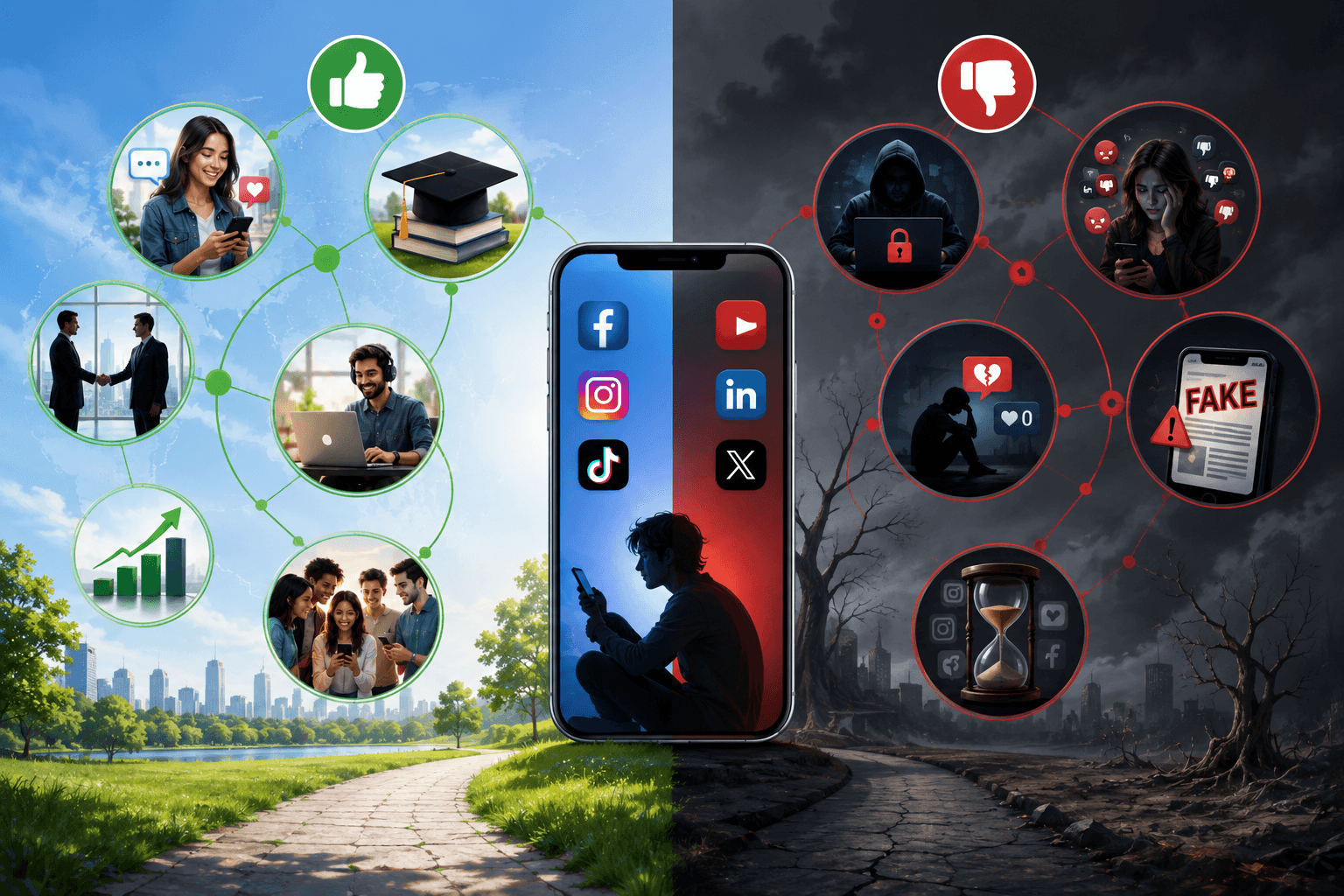
Social Media Advantages and Disadvantages
Social media has become a part of everyday life. People use it to connect with friends, share ideas, learn new skills, and discover products and services. Businesses use social media for marketing, while students use it for education and collaboration. Although these platforms offer many benefits, they also come with challenges that can affect individuals and society.
Understanding the social media advantages and disadvantages can help users make informed decisions and build healthy online habits.
What Is Social Media?
Social media refers to digital platforms where people can create, share, and interact with content. Popular social media platforms include Facebook, Instagram, YouTube, LinkedIn, TikTok, and X. These platforms allow users to communicate instantly, join online communities, and stay informed about current events.
What are the Advantages of Social Media?
Better Communication
One of the biggest benefits of social media is instant communication. People can stay connected with family, friends, and colleagues from anywhere in the world through messages, voice calls, and video calls.
Easy Access to Information
Social media provides quick access to news, educational content, tutorials, and expert advice. Students, professionals, and business owners can find useful information and learn new skills with just a few clicks.
Supports Education
Educational institutions and teachers use social media to share study materials, conduct online discussions, and encourage collaborative learning. Students can also join learning groups and access free educational resources.
Business Growth and Marketing
Social media marketing helps businesses increase brand awareness, reach new customers, and build stronger relationships with existing ones. Companies can promote products, answer customer questions, and receive direct feedback through social media platforms.
Career and Networking Opportunities
Professional networking platforms help individuals connect with employers, industry experts, and potential clients. Building a strong online presence can also improve career opportunities and personal branding.
Entertainment and Creativity
Social media allows users to watch videos, listen to music, participate in live streams, and share creative content. It also gives content creators a platform to showcase their skills and reach larger audiences.
What are the Disadvantages of Social Media?
Social Media Addiction
Excessive use of social media can reduce productivity and affect daily routines. Spending too much time scrolling through feeds may lead to poor time management and reduced focus.
Mental Health Concerns
Constant exposure to carefully edited content may create unrealistic expectations. This can contribute to stress, anxiety, low self esteem, and reduced confidence, especially among teenagers and young adults.
Cyberbullying and Online Harassment
One of the major disadvantages of social media is the rise of cyberbullying. Negative comments, online abuse, and harassment can have a serious impact on emotional wellbeing.
Spread of Fake News
False information spreads quickly across social media platforms. Misinformation can confuse users, influence public opinion, and make it difficult to identify reliable sources.
Privacy and Security Risks
Sharing personal information online increases the risk of identity theft, scams, and data breaches. Users should review privacy settings and avoid sharing sensitive information publicly.
Reduced Face to Face Interaction
Heavy dependence on digital communication may reduce real world social interaction. Spending less time with family and friends can affect personal relationships over time.
Positive and Negative Impact of Social Media
The impact of social media depends on how people use it. Responsible use can improve communication, learning, and business growth. On the other hand, excessive use can affect mental health, productivity, and privacy.
Maintaining a balance between online and offline activities is important for a healthier digital lifestyle.
Tips for Responsible Social Media Use
Following a few simple habits can help users enjoy the benefits of social media while reducing its risks.
- Set daily screen time limits.
- Follow trusted sources for information.
- Protect personal data with strong privacy settings.
- Avoid comparing your life with online content.
- Take regular breaks from social media.
- Report fake accounts and harmful content.
Conclusion
The advantages and disadvantages of social media show that these platforms can be valuable tools when used responsibly. They improve communication, support education, encourage business growth, and provide entertainment. At the same time, users should be aware of issues such as social media addiction, cyberbullying, misinformation, and privacy concerns.
Using social media with balance and awareness allows people to enjoy its benefits while reducing its negative effects. Responsible digital habits can help individuals, students, and businesses make the most of today's connected world.
FAQs
What are social media advantages and disadvantages?
Social media offers benefits such as better communication, education, and marketing opportunities. Its disadvantages include addiction, fake news, online harassment, and reduced face to face interaction.
What are the positives and negatives of social media?
The positives include global connectivity, learning opportunities, and business promotion. The negatives include privacy risks, misinformation, excessive screen time, and mental health concerns.