Digital MarketingJune 1, 2026
What Is GEO (Generative Engine Optimization) and Why Your Business Cannot Afford to Ignore It
You can rank #1 on Google today and still be completely invisible to a customer who searched for you on ChatGPT five minutes ago. That gap is what Generative Engine Optimization exists to close. Checkout the article to know more about GEO and how it is useful for your business.
Agix International
Agix International
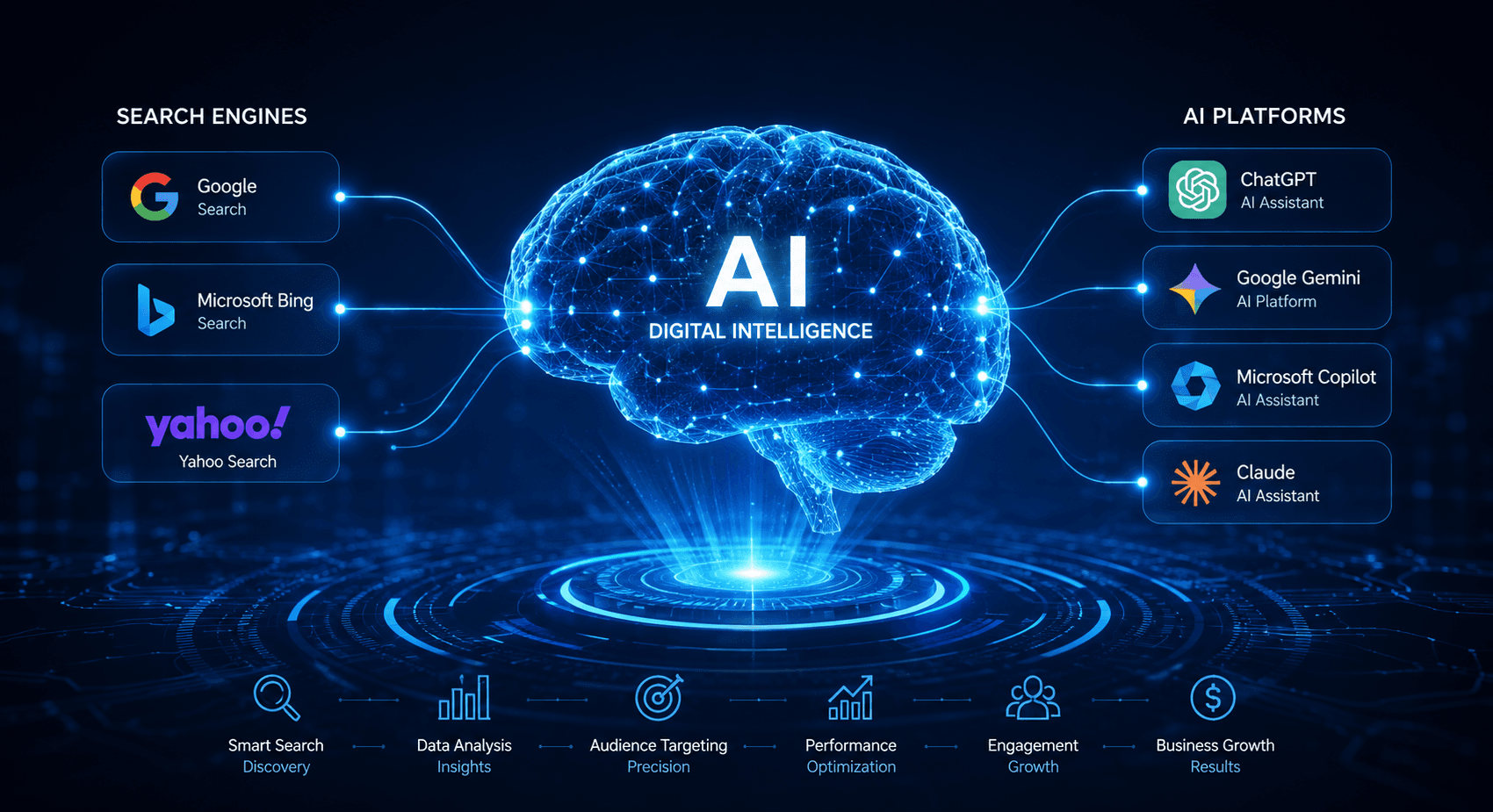
What Is GEO and Why Does It Matter Right Now?
Think about how your customers used to search for a service like yours. They typed a query into Google, scanned a list of blue links, and clicked through to a website. That process is changing faster than most business owners realize.
Today, a growing number of people skip Google's traditional results entirely. They open ChatGPT, Perplexity, or Google's own AI Overviews and ask a direct question. The AI gives them a direct answer, often with a recommendation baked in. If your business is not part of that answer, you effectively do not exist for that customer in that moment.
Generative Engine Optimization, or GEO, is the discipline of making sure your brand shows up inside those AI-generated responses. It is not about tricking an algorithm. It is about structuring your content, your credibility signals, and your digital presence in a way that AI systems recognize you as a trustworthy, citable source.
The term itself comes from a 2023 research study led by a Princeton University team, who were the first to formally study how brands could improve their visibility inside AI-generated search results. Since then, it has moved from an academic concept to a business-critical strategy.
How Search Behavior Has Shifted in 2026
The numbers behind this shift are hard to argue with. Here is where things stand right now:
60% of searches end without a click - AI answers the question before users visit any website 800 million weekly ChatGPT users - AI search is not a niche behavior — it is mainstream 58% drop in clicks on the #1 Google result - When AI Overview is shown, even top rankings lose traffic 73% of B2B buyers use AI in research - Your potential clients are already searching this way
Those numbers represent a fundamental restructuring of how people discover businesses. Customers are not abandoning search. They are just using a different kind of search, one powered by AI that synthesizes information and hands them a curated answer.
This is the part most business owners miss: sites that have not adapted to this shift are seeing 20 to 40 percent declines in traffic from informational searches. That trend is not reversing. It is accelerating.
The businesses winning right now are not the ones with the biggest ad budgets. They are the ones whose content is structured in a way that AI platforms trust and cite. That is a learnable, actionable skill, and this article will walk you through it.
GEO vs. SEO: What Is Actually Different?
Before you can apply GEO, you need to understand how it differs from traditional SEO. The good news is that they are not opposites. GEO is built on top of a solid SEO foundation. But there are meaningful differences in what gets rewarded.
Traditional SEO vs GEO (Generative Engine Optimization)
Goal
- Traditional SEO: Rank in a list of search results.
- GEO: Get cited inside an AI-generated answer.
Success Metric
- Traditional SEO: Click-through rate (CTR) and keyword rankings.
- GEO: Citation frequency and AI share of voice.
Content Style
- Traditional SEO: Keyword-rich, comprehensive guides.
- GEO: Direct answers, structured data, and original insights.
Authority Signal
- Traditional SEO: Backlinks and domain authority.
- GEO: External mentions, expert citations, and brand reputation.
Algorithm
- Traditional SEO: Ranking algorithms used by search engines like Google.
- GEO: Large language model retrieval and inference systems.
Traffic Type
- Traditional SEO: Volume-based clicks and organic traffic.
- GEO: Lower traffic volume but significantly higher purchase intent.
One more thing worth calling out: AI referral traffic converts at a much higher rate than typical organic traffic. Studies have shown Perplexity converts at over 10 percent and Claude converts at 5 percent, both well above the 1.76 percent baseline for standard Google organic results. That means even a smaller volume of AI-referred visitors can drive serious business outcomes.
"Ranking #1 on Google no longer guarantees clicks. Being cited inside an AI response is the new visibility currency."
How AI Engines Decide What to Show
This is where things get genuinely interesting. AI systems like ChatGPT, Perplexity, and Google's AI Overviews do not work the same way as a traditional search algorithm. They do not rank a list of pages. They read, synthesize, and generate an answer, drawing on sources they evaluate as credible and structured clearly enough to be useful.
There are a few key factors that determine whether your content gets included:
Structured, direct answers
AI systems strongly prefer content that gets to the point fast. The first 200 words of any page or article should directly answer the question being asked. Pages that build slowly toward a point, the way many traditional blog posts do, tend to be skipped over in favor of content that answers first and explains second.
Original data and expert insights
Generic content that summarizes what everyone else has already said is being filtered out by AI at a rapid pace. Content that contains original research, proprietary data, case studies, or genuine expert perspectives is far more likely to be cited. AI is looking for sources worth quoting, not sources that repeat common knowledge.
External credibility signals
Your website is not the only place that matters. AI systems pay close attention to what other credible sources say about your brand. Press coverage, third-party review platforms, mentions on industry publications, and active social profiles all contribute to whether an AI system considers your brand citation-worthy.
Technical structure
Schema markup, clean site architecture, and clear entity definitions help AI systems understand what your business does, who it serves, and why it is authoritative. These are not optional details. They are the foundation that makes everything else work.
5 Steps to Get Started with GEO
You do not need to overhaul your entire website overnight. Start with these five actions and build from there.
Step 1: Audit what AI currently says about your brand
Open ChatGPT, Perplexity, and Google's AI Overviews. Search for your services in your industry and your city. Ask "who are the best [your service] providers in [your location]?" See if your brand appears. If it does not, that is your starting point. This audit tells you exactly how much ground you need to make up, and in which AI platforms specifically.
Step 2: Rewrite your key pages to answer questions first
Take your most important service pages and restructure them so the opening paragraph directly answers the most common question a customer would have. Avoid long introductions, vague mission statements, or fluffy brand language at the top. AI systems scan opening content heavily. If your page does not answer the question within the first few sentences, it is already at a disadvantage.
Step 3: Build out a topical content cluster
AI search rewards brands that demonstrate deep expertise across a topic, not just one well-written page. Create a hub of content around your core service area: a detailed pillar page supported by several specific, well-researched articles. Each piece should link to the others and address a distinct question your customers actually ask. This is how you signal topical authority to AI systems.
Step 4: Build your external presence
Start getting your brand mentioned on sources that AI systems already trust. This means consistent and positive reviews on Google, Trustpilot, and industry-specific directories. It means getting quoted in trade publications, being featured in local news, and participating in industry forums and LinkedIn with genuine expertise. Every external mention is a data point that tells AI your brand is real, credible, and worth recommending.
Step 5: Implement structured data markup
Add schema markup to your website. At minimum, implement Organization, LocalBusiness (if relevant), Service, FAQ, and Review schema. This is the technical layer that helps AI engines extract information about your brand accurately and efficiently. Most business owners skip this step entirely. That makes it a genuine competitive advantage for those who do it.
3 Mistakes Business Owners Make with GEO
As more businesses start paying attention to AI visibility, certain mistakes keep coming up. Avoid these from the start.
1. Treating GEO as a replacement for SEO. They work together. Your Google rankings still matter because AI systems partly use traditional search indexing to find content. Abandoning SEO in favor of GEO alone is like pulling the foundation out from under a house you are still building.
2. Publishing generic, AI-generated content at scale. The fastest way to disappear from AI citations is to flood your site with thin, repetitive content that does not add real value. AI systems are getting better at identifying this, and they actively deprioritize it. One genuinely useful, original article outperforms ten generic ones in the GEO world.
3. Measuring only traditional metrics. If you are still tracking only keyword rankings and organic click volume, you are missing the most important signals. Start tracking AI citation frequency, branded search volume, and AI referral traffic in Google Analytics 4 separately. What you measure shapes what you improve.
The Bottom Line for Business Owners
GEO is not a trend that might fade. It is the natural next step in how the internet works, driven by a fundamental change in how people search for information and make buying decisions. Businesses that adapt now will establish authority in AI results while the competition is still catching up. Businesses that wait will spend the next two years trying to recover ground they could have held from the start.
The bar to get started is not as high as it might seem. You do not need a complete website rebuild or a massive budget. You need a clear strategy, the right content structure, and consistent execution over time. That is exactly what a good digital marketing partner helps you build.
Quick Takeaway: Businesses investing in GEO now are reporting up to 40 percent higher visibility in AI-generated answers and 4x more qualified traffic compared to those relying on traditional SEO alone. The window to get ahead of this is still open, but it is closing.